Buying a house in Maine often means buying a whole set of private systems along with it: a well, a septic system, an oil tank and boiler, maybe a wood stove, maybe a barn. A home inspector's general report covers the structure, roof, electrical, plumbing and heating. The specialized tests that matter most in Maine, for radon, water and lead, each come with their own rules about who may do them.
How do you judge an inspector the state doesn't license?
Maine has no home inspector license or registration, which surprises buyers coming from states that do. That leaves you to judge the inspector yourself. Useful questions:
- How long have you inspected in this part of Maine? An inspector who knows camps around Rangeley, coastal houses in Southwest Harbor or farmhouses near Turner has seen the common problems.
- Can I see a sample report? Look for photos, plain explanations and clear priorities, not pages of boilerplate.
- What is not included? Most inspections exclude the inside of the septic system, the well's yield, the chimney flue's interior and anything hidden behind finishes.
- Do you carry errors-and-omissions and liability insurance?
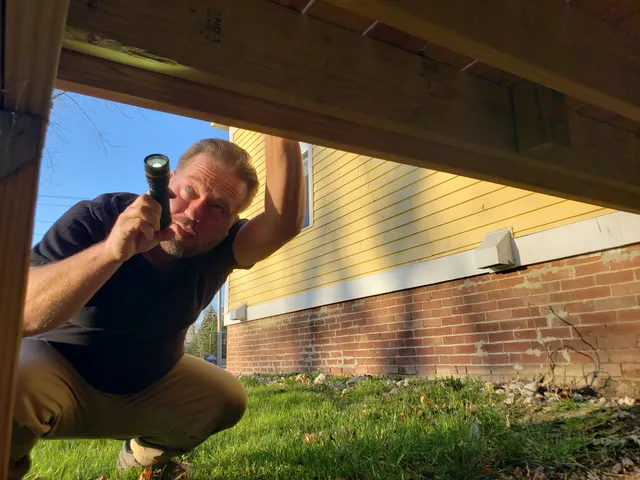
- Can I attend? Walking the house with the inspector is the most valuable hour of the process.
Since nothing licenses the inspector, be wary of one recommended by a party who profits from a quick sale. Hire your own.
Who may run the radon test at a sale?
Radon is common across Maine, in sandy-soil towns more than ledge ones, and a radon test is a standard part of a purchase here. The rules on who tests come from the Maine CDC radon program: an owner or occupant may test their own home, but anyone testing for someone else must be a state-registered radon tester, and in a real estate sale the test must be done by an independent registered tester.
Many home inspectors are registered radon testers and will add the test. Ask for their registration, ask whether they'll test the air only or the well water too, and ask how long the test runs and how they prevent tampering. A short test during the inspection period is normal; a high result usually leads to negotiating the cost of a mitigation system.
What should a buyer test the well for?
About half of Maine homeowners get their water from private wells, and nobody regulates them. The Maine CDC sets out two tiers of testing:
- Every year: coliform bacteria, E. coli, and nitrate and nitrite.
- Every three to five years: arsenic, uranium, radon in water, manganese, hardness, iron and more.
When you buy, the broader panel is the one to run, because you don't know when it was last done. Ask who collects the sample and which lab runs it. Results take a little time, so build that into the inspection contingency. The CDC's help line, 866-292-3474, can explain a result.
The general inspector usually looks at the pressure tank, the pump controls and any treatment equipment, but not the well's yield. If water supply is a worry, as in a dry year or on a ledge lot, ask about a flow test.
Does the inspection cover the septic system?
Rarely in depth. Septic systems are governed by Maine's Subsurface Wastewater Disposal Rules, and a full evaluation usually means pumping the tank and looking at its condition, the baffles and the field. Many buyers hire a septic company or a licensed site evaluator for this, separately from the home inspection. Ask the town office for the system's permit file, which often shows when it was installed and what was designed.
Are you buying a camp you want to live in year-round?
Then a specific Maine law matters. If a seasonal dwelling sits in the shoreland zone, converting it to a year-round or principal residence requires a permit from the town's plumbing inspector first, under 30-A M.R.S. §4215. The key issue is whether the septic system can serve full-time use. DEP explains how the shoreland zone works and points owners to the local code officer (Maine DEP shoreland zoning).
So if you're buying a lake camp in the Belgrade Lakes or a cottage near Ogunquit to live in full time, ask the town before closing whether a conversion permit has been issued, or what it would take.
Is lead part of a Maine home inspection?
Not usually. A standard home inspection doesn't test for lead. Maine DEP considers lead paint possible in more than half of the state's homes, with houses from before 1950 most at risk (Maine DEP lead), and a formal lead inspection has to be done by a DEP-licensed lead inspector; DEP lists them on its find a lead professional page. If you have young children and the house in Lewiston, Auburn or Portland was built before 1978, consider adding one.
What should you read in the inspector's own agreement?
Most inspectors ask you to sign a pre-inspection agreement, and with no state license setting standards, that document defines what you are buying. Read it before the day of the inspection, not in the driveway.
Look for:
- The standard of practice. Many inspectors follow a national association's standards. The agreement should say which one, so you know what the inspector is promising to look at.
- Exclusions. Common ones are the well's flow, the inside of the septic tank, the chimney flue, mold sampling and anything under snow. In a Maine winter, snow can hide the roof, the grading and the septic field. Ask whether the inspector will come back after a thaw.
- A cap on liability. Some agreements limit the inspector's liability to the fee. Know that before you rely on the report for a large decision.
- When you get the report. In a short contingency period, a report that arrives in five days may be too late to order follow-up tests.
- Add-on tests. Radon, water and any others should be listed with their prices and their turnaround times.
If the agreement lets you bring your own specialist for a roof, a boiler or a structural concern, use it for anything the general report flags.
What else is worth checking on a Maine house?
Ask the inspector to pay attention to:
- The heating system and oil tank. Age, any leaks under the tank, the condition of the chimney or vent. Fuel-burning equipment is serviced by Fuel Board licensees, whose names can be looked up on the state's ALMS search.
- Wood stoves. Clearances, the hearth, and the chimney liner.
- The attic. Signs of ice dams, air leaks and frost on the roof sheathing.
- The foundation and basement. Water stains, efflorescence and a sump, if there is one.
The Maine calculator default for a typical inspection is about $480 to $680; the Maine home inspection cost estimate explains it. Add-on tests are priced separately. In busy spring markets around Falmouth, Kennebunk or Bangor, book the inspector as soon as an offer is accepted; in Presque Isle or Bar Harbor, ask early how far they'll travel.