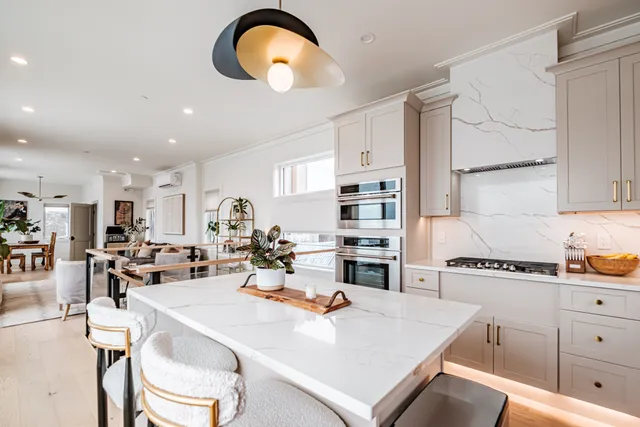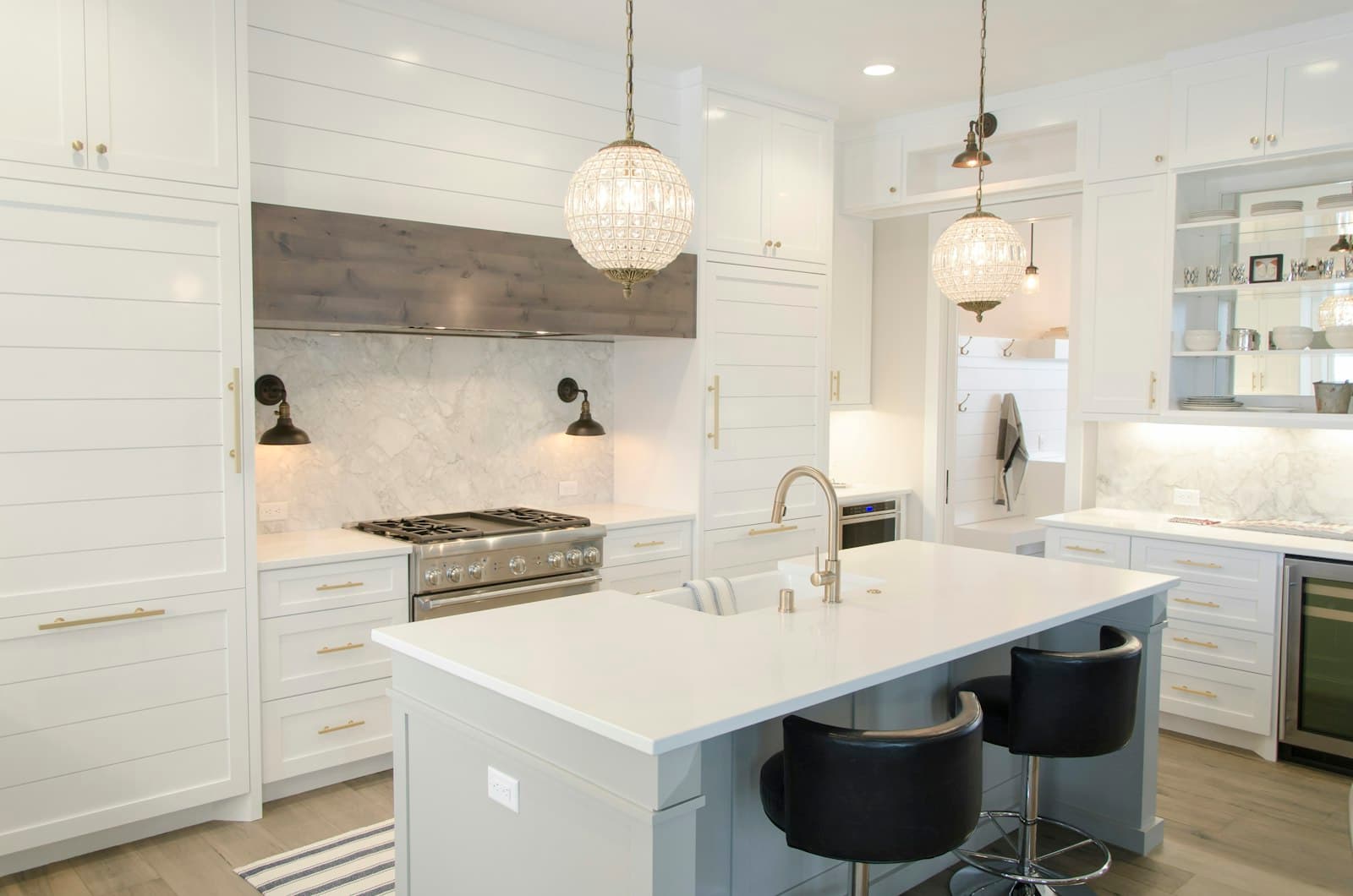
A kitchen remodel is the job where Maine homeowners most often hand a contractor a large check early. Cabinets have to be ordered weeks or months ahead, counters can't be templated until the cabinets are in, and appliances arrive on their own schedule. The order of operations makes it tempting to pay a lot up front. Maine law draws a firm line there, and knowing where it sits will shape the whole contract, whether the kitchen is in a Cumberland colonial, an older house in Bath or a split-level in Hampden.
How much can a remodeler collect before the cabinets arrive?
Any kitchen remodel worth more than $3,000 falls under the Home Construction Contracts Act, and section 1487 says the method of payment must keep the initial down payment at no more than one-third of the total contract price. On a $27,000 kitchen, that is $9,000 at signing.
Cabinets for a kitchen that size can easily cost more than the first payment. A careful remodeler handles this with the schedule, not by stretching the deposit: the second payment falls due when the cabinets are delivered to the site, and you can inspect them before paying. Ask for the cabinet order confirmation, with the expected ship date, once it is placed. If the remodeler asks for half the price at signing "because of the cabinets," point to the statute.
The contract must also have an estimated start date and an estimated date of substantial completion. Those dates can only slide for reasons outside the contractor's control, which the law illustrates with materials that can't be had. A cabinet line that is backordered for eight weeks qualifies; a crew that took another job does not.
Which kitchen trades must hold their own Maine license?
The remodeler holds none; Maine licenses no general contractor or remodeler (AG home construction and repair). But a kitchen typically involves three licensed people:
- A plumber for the sink, dishwasher, ice maker and any relocated drain.
- An electrician for new circuits, which a modern kitchen nearly always needs: dedicated lines for the range, microwave and dishwasher, and counter outlets.
- A Fuel Board technician if a propane or natural gas range, cooktop or wall oven is going in. The Maine Fuel Board licenses propane and natural gas technicians. Gas service runs mostly in the larger towns, so for many homes in Windham, Standish or Belfast this means propane.
All three are licensed as individuals, and all three show up on the state's ALMS search by name. Ask for the names in the bid.
If you are switching from an electric range to propane, plan for the gas line route and the outside tank placement early. It's a separate trade and often a separate schedule.
Will an inspector see your new kitchen?
That depends on where you live. The Maine Uniform Building and Energy Code is mandatory only in towns with more than 4,000 residents (10 M.R.S. §9724). In Kennebunk, Wells, Brunswick or Auburn, a kitchen that moves walls or adds circuits will mean permits and inspections. In a small town like Damariscotta or one of the farm towns around Houlton, there may be no building inspection at all, though the town's plumbing inspector still handles plumbing permits.
Opening a wall between the kitchen and dining room deserves extra care either way. If the wall carries load, the beam that replaces it should be sized properly, ideally by an engineer or from manufacturer tables, and you should see that sizing in writing.
Are the old cabinets and trim a lead hazard?
In an older house, quite possibly. Maine DEP warns that more than half of Maine homes may contain lead paint, with the greatest risk in homes built before 1950 and in renovation of homes built before 1978 (Maine DEP lead). Painted cabinets, window casings and the plaster behind them all come out in a kitchen gut.
Federal renovation rules call for lead-safe practices on pre-1978 homes. Ask how the crew will seal the kitchen from the rest of the house, what they do with debris, and how they clean at the end of each day. If you own a rental, the kitchen in one unit affects your rating too: DEP rates rental units as "Lead Maintained," "Lead Safe" or "Lead-based Paint Free" through its healthy rental housing program, shown on MaineHousingSearch.
How does the contract settle a fight over a kitchen?
Maine's statute writes the dispute clause for you, nearly word for word. Section 1487 requires a statement giving the parties a choice, beyond small claims court, among three ways to settle a dispute: binding arbitration under the Maine Uniform Arbitration Act, where the arbitrator's decision is final; nonbinding arbitration, where either side can reject the result and go to court; or mediation, where a neutral mediator helps the two of you settle before anyone files a lawsuit. You check one box, and the cost is shared.
Read that box before you sign. Binding arbitration is faster and private, but there's no appeal. Mediation keeps your options open. Small claims court, which the AG notes handles disputes under $10,000, remains available whichever you check. On a kitchen, the classic disputes are a counter seam, a cabinet that arrived in the wrong finish, and a schedule that slipped by a month, and each of them is easier to settle if the contract named the product.
When should a coastal rental's kitchen be redone?
On the summer coast, timing is its own question. Owners of rental cottages in Boothbay Harbor, Camden or Ogunquit generally want the kitchen finished before the season, which pushes the work into fall, winter and early spring. Remodelers who serve those towns know this and fill that window first.
If your kitchen has to be done by a rental date, put that date in the contract as the estimated completion, and agree on what happens if it is missed: a reduced price, a credit, or simply a clear plan for a working sink and fridge by opening day. Order cabinets in late summer, before the remodeler starts, so the long lead item isn't the reason the job runs into June. And ask whether anyone will be on site through a midwinter storm, when a heater left off in an empty cottage can freeze the new plumbing.
What should the kitchen contract name, piece by piece?
A kitchen contract that only says "remodel kitchen per discussion" invites trouble. Ask for:
- cabinet maker, door style, finish and box construction
- counter material, edge profile and who templates it
- sink, faucet and every appliance by model, and whether you or the remodeler buys them
- flooring, and whether it runs under the cabinets
- lighting, outlets and the number of new circuits
- allowances, with a dollar figure for each item you haven't chosen yet
- how hidden damage behind walls will be priced
The Maine calculator default for a typical kitchen remodel is about $20,700 to $31,500, and the Maine kitchen remodel cost estimate shows the assumptions behind it. Allowances are where final bills drift past a quote, so set them at realistic numbers rather than low ones that make a bid look cheap.