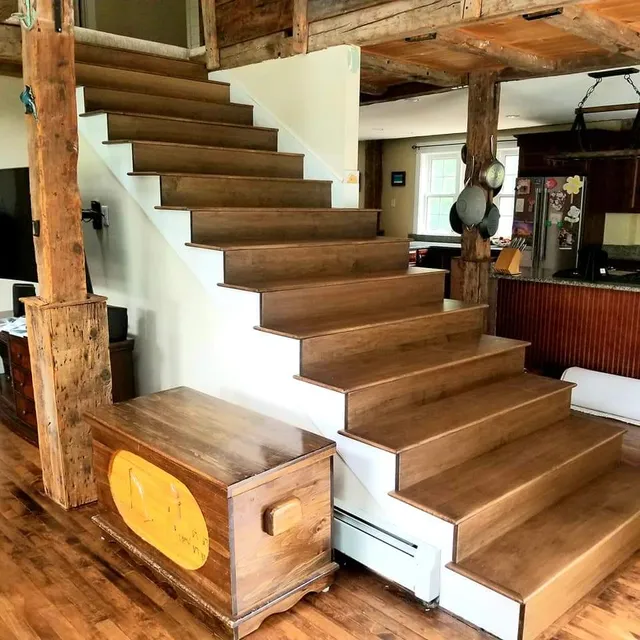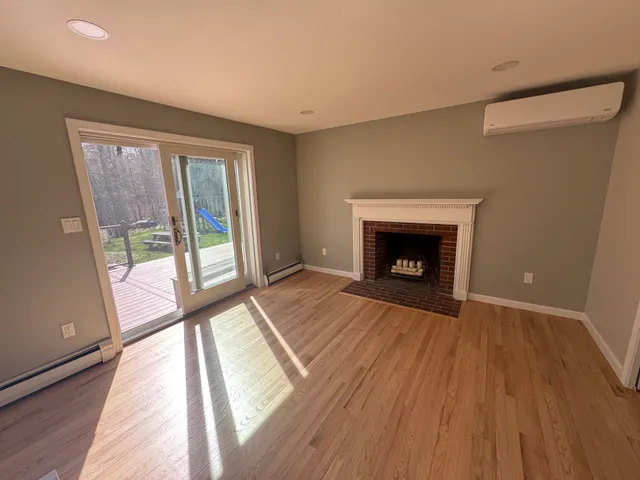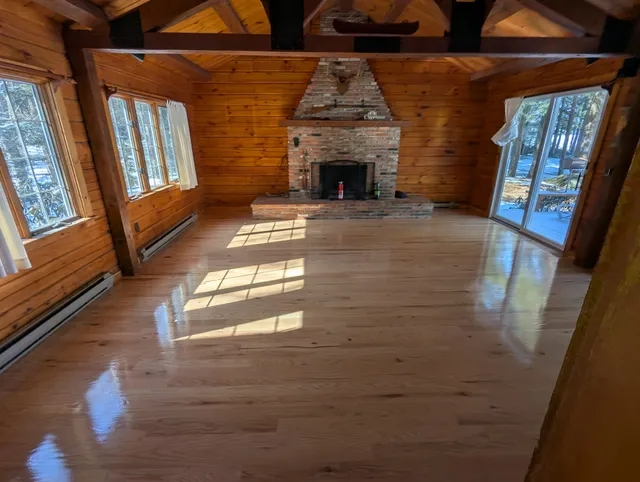
Flooring in a Maine house sits on top of a lot of history. Lift a carpet in a Lewiston tenement and you may find linoleum, then fir boards painted brown. Pull up vinyl in a Gorham ranch and the subfloor may be stained from an old leak. Under a farmhouse kitchen near Lisbon or Sabattus, the boards might be wide pine that someone painted gray a century ago. A flooring installer has to deal with whatever is underneath, and the price depends on it.
Is a flooring job covered by Maine's contract law?
Yes, and carpet is named outright. Maine's Home Construction Contracts Act defines home construction to include "carpeting" and "window replacements," along with electrical, plumbing and heating work, when done on a residence of up to three units (10 M.R.S. §1486). Hardwood, tile and vinyl plank installed in a house are repair and remodeling under the same Act.
The Act's main rule kicks in above $3,000. From there, §1487 requires the deal to be written out and signed by installer and homeowner alike, with each keeping a copy from before the first board goes down, and it lets the installer collect no more than a third of the price as the down payment. For a flooring contract, the description of work and materials is where to be precise:
- the product by brand, line, color and thickness
- square footage per room, and how waste is figured
- underlayment, moisture barrier and any subfloor leveling
- what happens at doorways, stairs and transitions to other floors
- removal and disposal of the old flooring
- moving furniture and appliances, and reinstalling baseboards
Maine licenses no flooring installer. The Attorney General's page makes the general point that the trades are unlicensed here, which leaves the contract as the main protection.
Can you back out of a flooring sale made in your living room?
Flooring is often sold in the home: a salesperson measures, shows samples and quotes a price that is "good today only." Maine's consumer solicitation sales law gives you a cooling-off period for that kind of sale. Under 32 M.R.S. §4664, you can void the contract by written notice sent by ordinary mail within three full business days after the day of the sale.
A few details from the statute that matter:
- The notice takes effect when you drop it in the mail, not when it arrives.
- It can go to the address on the contract.
- It needs no special form; it just has to say you don't intend to be bound.
The contract for such a sale has its own content requirements under §4662, and Maine's construction contracts Act expects a door-to-door contract to describe your right to cancel. Use the three days to get a second measurement and price from an installer in your own area, whether that is Augusta, Bangor or Presque Isle.
What's under the old floor in a pre-1978 house?
Paint, often. Painted floorboards were common in older Maine houses, and painted trim and baseboards come off during almost every flooring job. Maine DEP warns that more than half the state's housing may contain lead-based paint, with the oldest houses, those before 1950, carrying the highest risk, and that renovating any pre-1978 home is a major source of exposure (Maine DEP lead).
Sanding a painted floor is about the worst thing you can do with lead paint, because it makes fine dust that settles everywhere. If an installer proposes to sand and refinish painted boards, ask first:
- Has the paint been tested? DEP lists licensed lead inspectors on its find a lead professional page.
- What sander and vacuum setup will be used, and how will the room be sealed?
- Would covering the boards with a new floor be safer than sanding them?
Old adhesives and sheet flooring raise their own questions. If you don't know what an old layer is made of, ask the installer how they plan to identify it before tearing it out, rather than finding out from the dust.
Will a new floor survive a cold, damp Maine basement or a camp?
Moisture and cold are what ruin floors in Maine. A finished basement in Waterville or Scarborough may stay damp through summer. A seasonal camp near Ellsworth or Machias may sit unheated all winter. Both change which products make sense.
Ask the installer:
- Did you test the slab or subfloor for moisture, and what was the reading?
- Is this product rated for a below-grade space, or for a house that goes unheated?
- How long should solid wood sit in the house before installation, and at what temperature?
- What gap is left at the walls for seasonal movement?
Solid hardwood installed in summer humidity and then heated hard in January will shrink and open gaps. A good installer plans for the house's actual seasons.
Who wires a heated floor under new tile?
Heated floors are a popular add-on in Maine bathrooms and kitchens, where a tile floor over a cold crawl space can be painful in February. An electric mat or cable under tile is simple for a tile setter to lay, but connecting it is a different job. The thermostat, the dedicated circuit and the connection at the panel are electrical work, and in Maine that falls to a licensed electrician. The license belongs to the person, so ask for the electrician's name and look it up on the state's ALMS search.
Practical points to settle before the tile goes down:
- Who tests the mat's resistance before and after tile is set, and records the readings? A damaged cable under finished tile is costly to find.
- Where does the thermostat go, and does the floor sensor sit where it will read accurately?
- Does the circuit need a new breaker or a panel change?
- Is the mat covered under its own warranty only if a licensed electrician makes the connection?
Put the electrician's part and price in the flooring contract or in a separate written quote, so it isn't left for someone to "figure out" on install day.
How should the price and the schedule be set?
The Maine calculator default for a typical flooring job is about $5,400 to $8,650; the Maine flooring cost estimate explains the range. Square footage matters, but so do the stairs, the number of transitions, and how much subfloor needs repair once the old floor is up.
Agree in the contract on a price per square foot for subfloor replacement or leveling, so a surprise under the carpet becomes a quick written change rather than an argument. Ask for the estimated start and completion dates the Act requires, and for a date when the product will be delivered, so it has time to acclimate.
Finally, ask who takes away the old flooring and where it goes, and whether the price includes the dumpster or the dump fees.