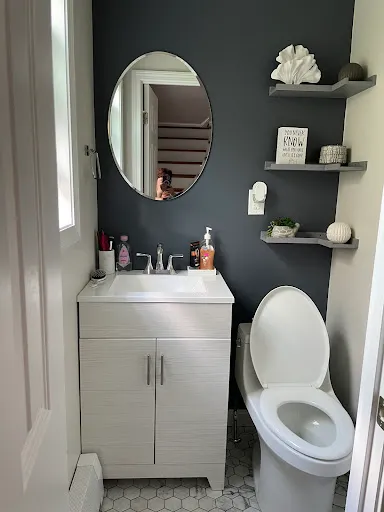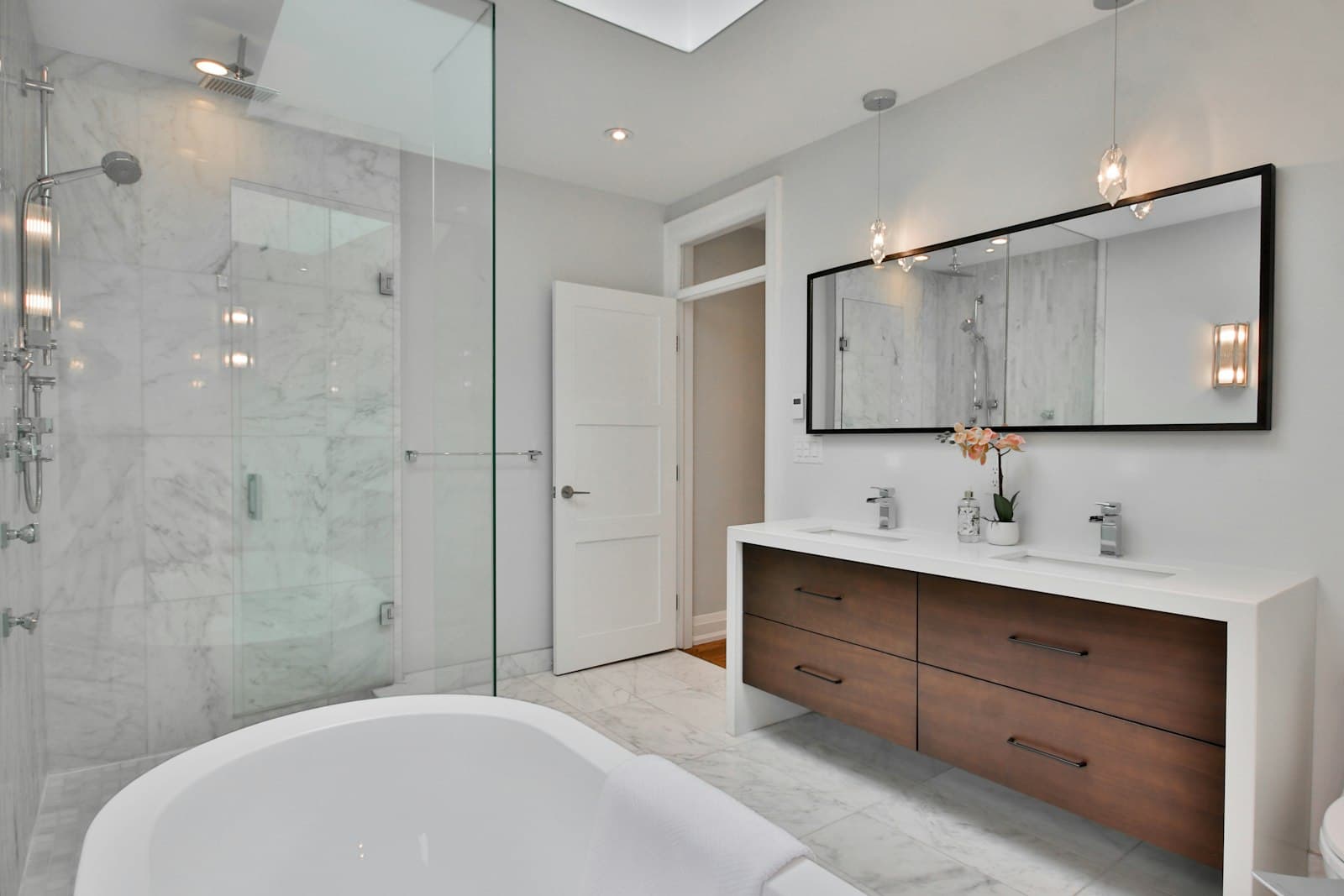
Bathrooms in Greater Worcester come in a few recurring shapes. In the city's three-deckers, each floor has its own bath, and they usually sit directly above one another so they can share a vertical drain. In the postwar capes and ranches of Auburn, Leicester and West Boylston, there is often a single small bath that the whole family has used since the 1960s. In the newer colonials of Westborough and Upton, the job is more often a primary-suite upgrade. And in older houses in the Blackstone Valley and the north county, a bath may have been carved out of a bedroom or a back hall decades after the house was built.
Each of those shapes changes what the remodel involves, how long it takes and what can go wrong.
When one bathroom shares a drain with two others
In a three-decker, the bathroom stack runs from the basement through every floor to the roof. Replacing a first-floor toilet flange is a simple job. Replacing the cast-iron section behind that toilet can mean opening the ceiling of the unit below or the floor of the unit above, and shutting water to the whole building for part of a day.
If you own the building, ask the remodeler early:
- Is the stack in good enough shape to tie into, or should a section be replaced while the wall is open?
- Which other units will lose water, and for how long?
- Who coordinates access with tenants?
- Will the plumber camera the drain before demolition?
Those answers can move the price by thousands and the schedule by days. They also decide whether this is a one-unit project or a building project.
If you own a condo in a converted three-decker, the stack is probably common property. Check with the association before anyone cuts it.
Three credentials in one small room
A full bathroom remodel brings several trades into a few square feet, and Massachusetts licenses them separately. The remodeling company should be a registered Home Improvement Contractor when the job is on an owner-occupied home of one to four units, and you can confirm that on the state's Contractor Hub. The plumbing has to be done by a state-licensed plumber and the wiring by a state-licensed electrician, both searchable on eLIPSE. Ask the remodeler for the names of the plumber and electrician they will use, and look those up too.
A company that says its carpenters "do the plumbing too" is telling you something important. Only licensed plumbers may connect fixtures to the supply and drain lines in Massachusetts.
Three permits for one bath, and which trade files each
Worcester's Building & Zoning division issues building, plumbing and electrical permits, and applications are made online. A bathroom that only gets new paint, a vanity top and a mirror may not need one. Once fixtures are replaced or moved, circuits added, or walls opened and reframed, the work is permitted.
The licensed plumber files the plumbing permit and the licensed electrician the electrical one. The remodeler, or whoever holds the supervisor license, files the building permit for framing work. Each trade's work is inspected before the walls close. Outside the city, the same split applies at each town hall: Northbridge, Sutton, Oxford and Westminster each have their own building, plumbing and wiring inspectors.
Ask your remodeler for a short list: which permits, filed by whom, and roughly when each inspection happens.
Reading the bathroom quote
The Greater Worcester calculator's default range for a full bathroom remodel is $26,400 to $43,200. You can try your own bathroom's size and finish level in the local estimate. Old houses add a few predictable costs:
- Subfloor rot under a tub or toilet that leaked for years.
- Plaster and lath walls, which take longer to demolish and are heavier to haul away.
- Out-of-level floors in century-old framing, which have to be leveled before tile.
- Ventilation. Many older baths have no exhaust fan, and adding one means a new path to the outside.
- Tile allowance. A low allowance makes a bid look cheaper than it is.
Ask each remodeler to list the fixtures by model, the tile allowance per square foot and what happens if they find rot.
Paint dust in pre-1978 houses
Nearly every three-decker in the city was built before 1978. Demolition in an old bathroom disturbs paint on trim, doors and window casings. Under the Massachusetts Lead Law, an owner of a pre-1978 home where a child younger than six lives must get lead hazards dealt with, by removal or by covering, and the owner answers for a poisoning even without knowing the paint was there. If a young child lives in the building, raise lead before demolition starts and ask the remodeler how they contain dust and clean up.
Dates, deposit and the three-day notice on a bath contract
A bathroom remodel above $1,000 must be on a written contract under c.142A §2. Several of that section's requirements matter especially on a bath:
- Dates. The contract has to give a start date and a substantial-completion date, which keeps a half-finished bathroom from sitting idle for weeks.
- The deposit. Up front, the remodeler is limited to a third of the price, though special-order items such as a custom vanity or glass enclosure may justify more when they cost more than that third.
- Cancellation. The contract must explain whatever three-day cancellation right applies to you.
- Permits. It must say the contractor obtains them.
City help for owner-occupants
Worcester's Housing Development office has described an owner-occupied rehab program, Worcester Housing Now, offering up to $25,000 per unit, in its housing programs overview. The presentation is undated, so check with the city whether it is open for the current cycle and whether bathroom work qualifies before you count on it.
Septic towns and a second bathroom
Adding a bath, rather than redoing one, raises a different question outside the sewered city. In much of the band, from Charlton and Dudley to Hubbardston and Phillipston, the house drains to a Title 5 septic system. A new bathroom adds fixtures and water to that system. Before you commit, ask the remodeler whether they have checked the job with your town's Board of Health, which oversees septic systems, and whether the project changes anything the board cares about. Getting that answer early is cheaper than finding out at the permit counter.
Accessible baths for staying at home
A growing share of bath remodels in the ring towns are about aging in place: a curbless shower, grab bars blocked into the framing, a taller toilet and a wider door. Plan that blocking before the walls close, even if the bars come later. Ask the remodeler whether the doorway can be widened without moving a bearing wall, which on an older house can turn a bath job into a structural one that needs a supervisor's license on the permit.