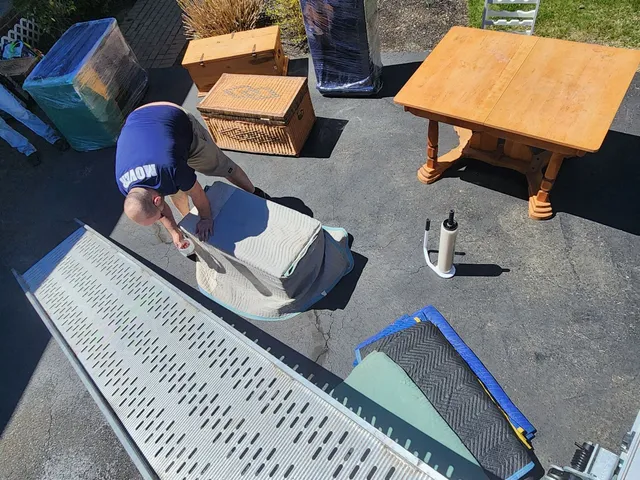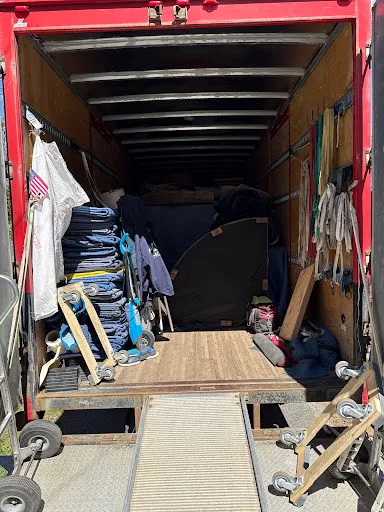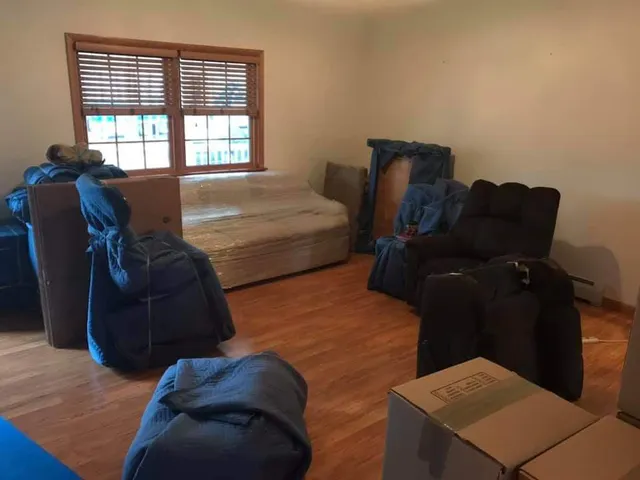
Moves in Greater Worcester come in a few familiar shapes. In the city, it is often a walk-up: a second- or third-floor apartment in a three-decker, a narrow interior staircase, a back porch, and a truck parked on a tight street. In the ring towns, Shrewsbury, Auburn, Holden, it is a family moving a full house, often from somewhere else in the state. And on the edges of the band, a move from Webster, Dudley or Blackstone may cross into Connecticut or Rhode Island a few miles away, which changes which agency regulates the mover.
This guide covers the credentials to check, the late-summer crunch, and how to compare estimates.
What a DPU authority and decal tell you
In Massachusetts, a company that moves household goods within the state for hire is regulated by the Department of Public Utilities. The state's page on applying to be a household goods mover explains the requirements from the mover's side: the company must obtain operating authority from the department before operating, file a tariff of its rates, carry insurance and put a decal on each vehicle, which is renewed every year along with proof of current insurance.
For you, that adds up to a simple check. Ask the company for its DPU authority number before you book, and look for the decal on the truck when it arrives. A crew with no number and no decal, offering a cash price for a Saturday, is not a licensed household goods mover in the state's eyes.
The authority also matters if something goes wrong. A regulated mover has filed rates and carries insurance the state has seen, which gives you a place to start if items are damaged or the bill does not match the estimate.
Moves that cross the Connecticut or Rhode Island line
Greater Worcester runs right down to two state lines. Webster and Dudley sit against Connecticut, and Blackstone, Millville and Uxbridge against Rhode Island. A move from one of those towns to any address across the line is an interstate move, even if it is only ten miles.
Interstate household goods movers are regulated by the federal government, through the Federal Motor Carrier Safety Administration. They need a USDOT number, which you can check on FMCSA's site. When you get an estimate for an interstate move, confirm that the company holding the USDOT number is the one that will actually carry your goods, not a broker that will hand the job to someone else.
Why the last week of August fills up
Worcester shares Boston's habit of turning over leases on September 1. With a large renter population, more than half of the city's households, and the colleges back in session, late August is the busiest stretch of the moving year. Worcester State University, for one, moved its 2025 residence-hall students in across Labor Day weekend, on August 31 and September 1, according to its move-in page.
That has practical effects for anyone moving in the city in late summer:
- Book early. Reputable movers fill the last days of August and the first of September weeks ahead.
- Expect higher prices. Peak dates usually carry peak rates, and the local calculator adds a premium for them.
- Plan parking. Streets near campuses and in three-decker neighborhoods are crowded with trucks and cars. Ask the mover how they will handle parking and whether they need you to arrange anything.
- Coordinate with the building. If you are leaving a three-decker, agree with the owner and other tenants on when the stairs and porch will be busy.
If you have any flexibility, a mid-month date in late August or a weekday in mid-September can be much cheaper and calmer.
Walk-ups, stairs and three-decker porches
The local calculator treats walk-up stairs as a real cost driver, and in Worcester they are. Carrying a sofa down three flights of a narrow interior stair, or around a turn on a back porch, takes time and sometimes takes a door off its hinges. Tell every company exactly what they are dealing with: which floor, which stair, whether the porch stairs are usable, and whether the furniture came in through a window.
Ask how the crew protects banisters, walls and floors on a shared stair. If the building has tenants on other floors, protecting the common stair is a courtesy and, if anything is damaged, a question of who pays.
Home size, stairs and dates: building a moving estimate
The calculator default for a typical local move in Greater Worcester is about $860 to $1,650. To build an estimate for your own home size, stairs and date, use the local moving estimate. Prices move with the size of the home, the number of flights, packing services, special items such as a piano or safe, and the season.
Get at least two written estimates based on the same inventory. Ask each company whether the estimate is binding or an estimate that can change, how they charge for time over the estimate, and what valuation coverage is included for damage. A much lower number that is not binding often ends up close to the others once the truck is loaded.
Moving out of an apartment
If you rent, read your lease for move-out requirements before booking the truck. Many leases ask for notice of the move date, the keys returned to a named person and the unit left broom-clean. Walk through the apartment once it is empty and take dated photos of every room, the stairs and the porch. On a busy turnover weekend, a landlord may be dealing with three units at once, and your photos are the clearest record of the condition you left it in when the security deposit comes up.
Moving into or out of a house in the towns
House moves in the ring towns and the outer band have their own logistics. A long gravel driveway in Princeton or Charlton may not take a full-size truck, and the crew may need to shuttle with a smaller one. Tell the company about the driveway, any low wires or branches, and where a truck can turn around. In winter, ask what happens if the driveway is icy on moving day, and whether the company will reschedule without a fee if a storm closes the roads.
If the move involves a house sale, line up the dates with your closing. Many movers will store goods for a short period between closings, and it is worth asking the price for a week of storage before you need it.
Five things to confirm before the truck is booked
- What is your DPU authority number, or, for an interstate move, your USDOT number?
- Is this estimate binding, and how will extra time be charged?
- Who will be on the truck, and are they your employees?
- How do you protect stairs, floors and doorways?
- What happens, and who do I call, if something is damaged?