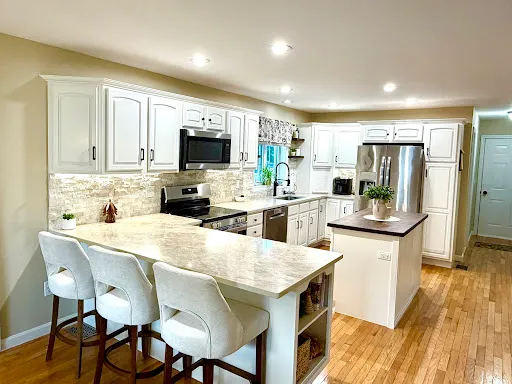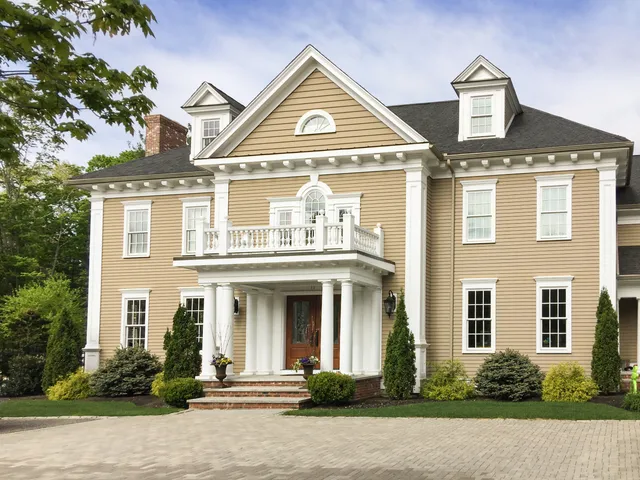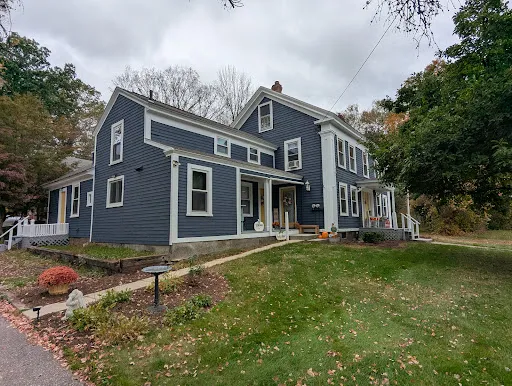
Painting in Greater Worcester is mostly painting old houses. In the city, about 43% of housing units were built in 1939 or earlier and more than half before 1960, according to the Census Bureau's 2024 survey. That means layer upon layer of old paint on clapboards, porch rails, window sashes and interior trim, much of it lead-based. Out in the towns the mix is wider: capes and ranches from the 1950s in Auburn and Millbury, newer colonials in Westborough, and old farmhouses and mill-village houses in Uxbridge, Blackstone and Athol. The paint question, though, comes up almost everywhere.
Why lead is the first question on an old house
Lead paint was banned for homes in 1978, and nearly every house built before then has some. Paint in good condition is not the problem. Scraping, sanding, power washing and heat guns are, because they turn old paint into dust and chips that children swallow and breathe.
Massachusetts takes this seriously. The state Lead Law requires that lead hazards be removed or covered in any house built before 1978 that a preschool-age child calls home, and it makes the owner strictly liable for a child's lead poisoning, even if they did not know about the paint or the child. For landlords in Worcester's three-deckers, where more than half of households rent, that applies to every unit where a young child lives.
So on any pre-1978 house, ask each painter:
- How will you prepare surfaces: wet scraping, dust-collecting sanders, or open dry scraping?
- How will you contain chips on the ground and keep dust out of the house?
- How do you clean up at the end of each day and at the end of the job?
- With a small child in the house, will your crew follow lead-safe methods, or should part of this go to a licensed deleader?
The answers will change the price, sometimes a lot. A bid that is much cheaper because it skips containment is not a bargain on a house with young children in it.
Painting over lead paint is not the same as deleading. If the goal is to bring a unit into compliance with the Lead Law, that work has its own rules and its own licensed contractors, and an ordinary repaint does not by itself satisfy it.
The city program that pays for deleading
Worcester runs its own help for this. The city's Housing Development presentation describes a Worcester Lead Abatement Program that covers up to $75,000 per unit. To qualify, the home must be pre-1978 with a child under six living there, the owner's income must be under 80% of area median income, and the owner accepts a five-year deed restriction. The city puts the job out to bid itself and pays the contractor directly.
That changes the order of operations. If you might qualify, contact the city before you hire a painter, because deleading done through the program comes first and repainting afterward costs far less once the hazards are dealt with. The presentation is undated, so confirm with the city that the program is open for the current cycle and what the waiting time is.
Exterior painting and the HIC registration
Interior painting is generally outside Massachusetts' home improvement registration. Exterior painting on an owner-occupied home of one to four units is inside it, according to the state's table of covered work. That means a painter doing your siding and trim should be registered, and you can check the company on the Contractor Hub.
Registration matters beyond paperwork. The state's Guaranty Fund is only available against registered contractors, and the contract rules that protect you on payment apply to this work.
A triple-decker exterior is its own job
Painting a three-decker is not like painting a ranch. The walls are tall, the lots are narrow and the porches stack three high on the front, the back or both. Expect:
- Staging or lifts on the high walls, sometimes set on a neighbor's side of the line.
- Porch work. Railings, balusters, columns and ceilings are slow to scrape and paint, and porch floors may need a different coating.
- Window trim. Three floors of windows, often with old wood sashes, take more prep than any other surface.
- Weather windows. Exterior paint needs dry days and reasonable temperatures; ask how the painter handles a long stretch of rain mid-job.
If tenants live in the building, agree on how they will be notified and how windows and porches will be kept usable.
Prep, height and lease season: what sets a painting price
The local calculator's default for a typical painting project is about $5,750 to $8,650. You can enter your own home's size and scope in the Greater Worcester estimate. Prices move with the amount of prep, the height of the walls, the number of colors and the condition of the wood. Ask each painter to separate prep, priming and finish coats, and to name the paint line and the number of coats.
Painters in the city fill up in late summer, when many leases turn over around September 1 and landlords repaint vacant units. If you want interior work done then, book early. For exteriors, late spring through early fall is the season.
Tying a painter's payments to finished walls
When an exterior repaint on a covered home tops $1,000, c.142A §2 wants it on signed paper, and the painter's registration number belongs on that page along with dates, the surfaces and products, and when each payment is due. A painter's deposit can't exceed a third of the price unless special-order material costs more, which is rare with paint. Tie later payments to finished sides of the house or finished rooms, not to dates on the calendar.
Mill-village houses and old farmhouses
Some of the band's most interesting painting jobs are outside the city. The Blackstone Valley's mill villages, in towns like Northbridge, Hopedale and Blackstone, are full of company-built worker housing: duplexes and rows with plain trim and lots of clapboard. North-county towns such as Templeton and Royalston have old farmhouses with long ells and barns attached. Many of these houses have been painted dozens of times, and the bottom layers are almost certainly lead.
On those houses, prep is most of the job. Paint that has failed down to bare wood needs scraping, priming and sometimes wood repair before any color goes on. Ask the painter how they will treat bare spots, whether they replace rotted clapboards or call a carpenter, and how they protect gardens and wells near the foundation from chips. A painter who works these towns regularly will price the prep honestly instead of promising a two-coat job over loose paint.
Small jobs, touch-ups and color
Not every job is a full repaint. Many Greater Worcester owners want one room, a front door, a porch floor or touch-ups before a sale. Ask whether the painter has a minimum charge, and whether they will match an existing color or need you to supply it. For a house going on the market in Shrewsbury or Grafton, a quick, clean interior repaint in neutral colors is a common request, and a painter who does that work regularly will usually quote it by the room.