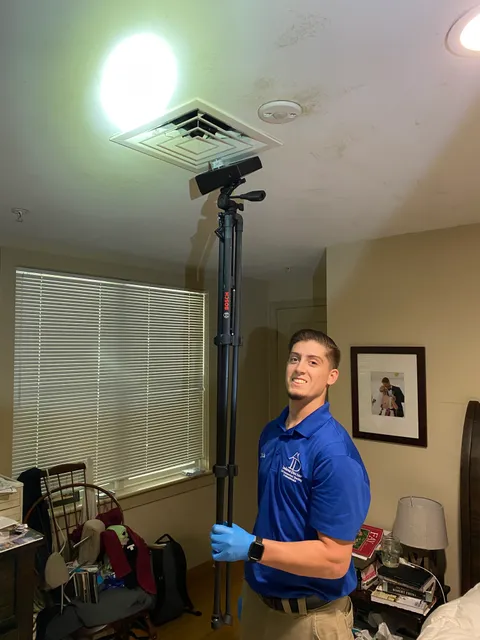
Buying a house in Greater Providence usually means buying an old one. About 30% of Rhode Island's housing was built before 1940, and the share is higher in the cities. A pre-war two-family in Providence, a Federal house in Bristol, a 1950s ranch in Warwick and a shore cottage in Charlestown each have their own list of things that go wrong. A good inspector knows the list for the house in front of them.
The CRLB inspector license and its two tiers
Rhode Island licenses home inspectors through the Contractors' Registration and Licensing Board, the same body that registers contractors. The board's home inspector license page sets out two levels:
- Associate home inspector, an entry-level license for inspectors working under the supervision of a fully licensed home inspector.
- Home inspector, the full license, which requires passing the national home inspector examination, a set number of supervised inspections, insurance coverage and continuing education to renew.
You can search an inspector on the CRLB search, the same tool used for contractors. If the person scheduled for your inspection is an associate, ask who supervises them and whether that inspector reviews and signs the report.
Also ask about insurance. Errors-and-omissions coverage is the policy that matters if an inspector misses something significant.
What a standard inspection leaves out
A home inspection is a visual review of the house's accessible systems and structure on one day. It is not a guarantee, and it does not cover everything. Commonly excluded, or offered only as an extra:
- the septic system or cesspool;
- the inside of the sewer line to the street;
- radon and water quality testing;
- wood-destroying insects, unless a separate inspection is ordered;
- anything behind finished walls or under carpet;
- chimneys beyond what can be seen from the roof and the firebox.
Read the inspector's pre-inspection agreement before the day. It states what is in and out. If you are buying a house in Scituate or Foster on a well and septic, schedule the extra inspections early so they all fit inside your purchase contract's inspection period.
Cesspools and septic: the inspection the law requires
Rhode Island's Cesspool Act puts its own deadlines on a house sale, separate from the home inspection. Under RIGL 23-19.15-12, if nobody knows how a house disposes of its wastewater, a system inspector must check for a cesspool before the sale. Once a sold building is found to rely on a cesspool, the new owner gets a year to swap it for an approved onsite system or hook up to public sewer. And when a property is or may be served by a cesspool, the purchase contract must give the buyer ten days to inspect the system unless both sides agree to a different period.
For buyers in older shore neighborhoods and rural towns, from Charlestown and Westerly to Tiverton and Coventry, that is a cost to price before signing. Ask your home inspector whether they also inspect wastewater systems, or can recommend someone who does, and get that report within the contract's inspection window.
Old-house specifics an inspector should cover
In this market's older houses, ask your inspector to pay particular attention to:
- Wiring. Older wiring types, ungrounded outlets and amateur additions in basements and attics.
- Heating. Old boilers, oil tanks above or below ground, and asbestos-like insulation on heating pipes that may need a specialist.
- Foundations. Fieldstone and brick foundations in pre-war houses, cracks in block walls in postwar ones, and signs of water.
- Porches and stairs. Multi-level back porches on triple-deckers in Pawtucket and Providence.
- Roofs and chimneys. Layers of shingles, flashing, and chimney crowns.
If the inspector flags a concern, the right next step is a specialist: an electrician, a structural engineer, a chimney sweep. The home inspector's job is to send you there, not to price the repair.
Buying a rental: lead conformance comes with it
If you are buying a pre-1978 building with rental units, as many buyers in Providence, Cranston and East Providence are, Rhode Island's lead law follows the property. Under RIGL 42-128.1-8, owners of such units must meet the lead hazard mitigation standard, and a new owner has 60 days to do so. A home inspector is not a lead inspector, so ask whether the seller has current lead documentation, and budget for an evaluation and any work it calls for.
Inspecting a two- or three-family
Multifamily buildings take longer and cost more to inspect, and they deserve it. Each unit has its own kitchen, bath, heating zone and often its own electrical panel and meter. Ask the inspector to:
- enter every unit, including occupied ones, which means arranging access with the seller's tenants;
- note which systems are shared and which are separate;
- check egress from upper floors and the condition of rear stairs and porches;
- look at smoke and carbon monoxide alarms in each unit;
- report on the age of each boiler or furnace and water heater.
A report that covers "Unit 1" in detail and the other two in a paragraph is not enough when you are buying three homes at once.
After the report: what to ask for
An inspection report can run to dozens of pages, and most items are minor. Sort them into three groups: safety issues, big-ticket systems that are close to worn out, and routine upkeep. The first two groups are what buyers usually negotiate. Get a quote from a contractor for anything major before you go back to the seller, so the number you ask for is real. And remember that the inspector reports what was visible that day; ask them what they could not see, and why.
Radon and flood maps: two quick checks
Radon cannot be seen or smelled and is found only by testing; the EPA's radon page explains why. Many inspectors offer a short-term test placed during the inspection period. Ask for it, and ask how results compare to the EPA's action guidance.
Flood risk is another check that takes minutes. Search the address on FEMA's Flood Map Service Center. Shore towns like Barrington, Warwick and Jamestown and the river valleys inland have mapped flood zones, and a mapped zone can mean required flood insurance on a mortgage.
Inspection fees, add-ons and sample reports
The Greater Providence calculator puts a typical inspection at about $490 to $700; adjust for house size and add-ons on the home inspection cost estimate for this market. A condo in Providence sits low. A three-family in Pawtucket with a radon test and a sewer camera, or a large Newport house, sits high. Do not let price decide alone: ask for a sample report from each inspector and choose the one whose reports you can understand.