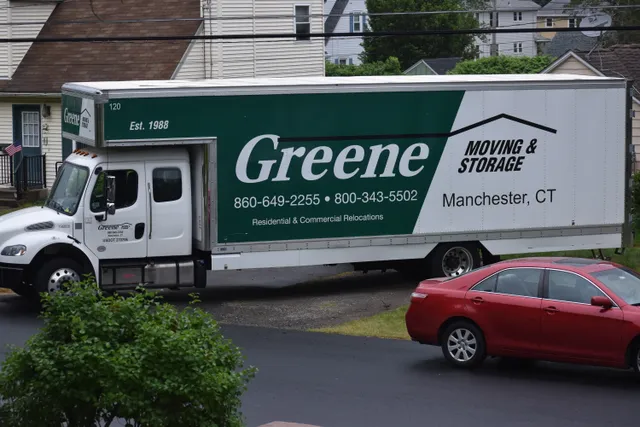
Movers are one of the few trades in this list that Connecticut regulates through its transportation department rather than its consumer protection department. That changes where you check a company's credentials, and it means the rules for a move from West Hartford to Wallingford differ from those for a move from Stamford to North Carolina.
The DOT certificate for moves inside Connecticut
A company that hauls household goods for hire between two points in Connecticut needs a certificate of public convenience and necessity from the Commissioner of Transportation. The requirement is in CGS Sec. 13b-389, the household goods carrier chapter of the statutes: no one may operate a vehicle carrying household goods for hire without one.
The same section adds a penalty for the people who skip it. Anyone other than a certificated carrier who holds themselves out as a household goods carrier, with intent to obtain a benefit or to defraud, is guilty of a class B misdemeanor. Fines collected on municipal summonses are split with the town.
This is a DOT credential, not one of the consumer agency's contractor registrations, so don't expect to settle it on eLicense. Ask the company for its certificate number and the exact name it's issued to, and compare that to the name on the estimate and the truck. A crew with a rented box truck and a website that went live last month is the profile to be careful of.
A USDOT number for moves across state lines
Once a move leaves Connecticut, federal rules take over. An interstate household goods mover must be registered with the Federal Motor Carrier Safety Administration and carry a USDOT number. FMCSA's Protect Your Move site explains how to look up a mover, what an estimate must say, and the warning signs of a moving scam.
Fairfield County households move to and from New York constantly, and the trip from Greenwich or Darien into Westchester or the city is an interstate move even though it's short. Check the USDOT number for any move that crosses the state line, however close.
Some brokers book moves and hand them to another carrier. Ask whether you're dealing with the company that owns the trucks, and if not, which carrier will actually do the move.
The August crunch in New Haven and Storrs
Late summer is the hardest time to book movers in Connecticut's college towns. Yale's roughly 15,600 students turn over New Haven's rental market each August, and the same thing happens around Hamden and West Haven. UConn does the same in Mansfield and the neighboring towns of Willington and Ashford, Wesleyan in Middletown, and Connecticut College in New London.
Layer on top of that the family moves timed to the school year in the suburbs, and late August and early September book up fast. To get the date you want:
- Book a month or more ahead for late-summer dates.
- Consider a weekday move, which is often easier to schedule and sometimes cheaper.
- Ask about parking. Many New Haven streets need a permit or a reserved space for a truck, and the mover will want to know in advance.
The commuter towns and the New Haven Line
Fairfield County's moving season follows the school year and the trains. Towns along the New Haven Line to Grand Central, from Greenwich to Norwalk, see a steady flow of families moving in from New York and out to other states. Spring and early summer are busy for sales; movers there often book early for June and July dates as well as August.
What to get in writing
Whether the move is local or interstate, get a written estimate that lists:
- the date, the arrival window and the number of movers;
- how the price is figured: hourly with a minimum, a flat price, or by weight or volume for a long move;
- charges for stairs, long carries, elevators, packing materials, a piano or safe;
- how much liability coverage is included, and what full-value protection would cost;
- the deposit and how it's refunded if you cancel.
Compare two or three estimates on those same lines rather than on the bottom number alone; an hourly quote with a low rate and a long minimum can end up costing more than a higher flat price. Never sign a blank or incomplete document on moving day. Inventory each room as boxes leave, and note any damage on the paperwork before the crew leaves your new home.
Third-floor walk-ups and narrow back stairs
A lot of Connecticut's rental and starter housing is in two- and three-families: Hartford's West End, New Britain, Waterbury, Bridgeport and New Haven are full of them. Moving out of a third-floor unit is a different job from moving out of a ranch, and a good estimate accounts for it.
Tell the mover, before they quote:
- which floor you're on, and whether the stairs are inside or on an outdoor back porch;
- how tight the turns are, and whether a sofa or box spring came in through a window;
- how far the truck will have to park from the door, and whether the street is one-way or permit-only;
- whether there's an elevator in a converted mill or apartment building, and whether it has to be reserved.
Crews charge for stairs and long carries because they take time and labor. An estimate that ignores them will come back as extra charges on moving day.
Pianos, safes and the heavy pieces
Pianos, gun safes, pool tables and big armoires often need a specialist or a separate crew. Ask whether the mover handles them in house, what equipment they use, and how they're insured for it. If not, book the specialist for the same day so the heavy piece doesn't hold up the rest.
Packing, storage and the house you're leaving
Movers often offer packing and short-term storage. Packing service saves time but can double the bill on a full house; packing the books, linens and kitchen yourself and leaving fragile items to the crew is a common middle path. If you're storing goods between houses, ask where the warehouse is, how goods are protected, and how the storage charge works.
If you're selling a house in Hartford, Southington or Torrington, plan the cleaners, painters and any repairs around the move date rather than after it. Home improvement work on the house you're leaving is a separate contract with its own rules from the state's consumer protection department.
Local move prices, stairs and the season
The state calculator's default for a typical local move is $850 to $1,600. Price your own move, with stairs, packing and the season, on the Connecticut moving cost page. Fairfield County crews tend to charge more, and moves in the eastern part of the state and the Litchfield Hills less.