Buying a house in Connecticut means buying an old house, more often than not. The median home in the state was built in 1967, oil heats more than half the homes in several regions, and about a quarter of residents drink from a private well. A home inspection here should cover more than the roof and the furnace, and part of hiring the right inspector is knowing what they can't tell you.
A license, not a certificate from a trade group
Connecticut licenses home inspectors under CGS chapter 400f. Sec. 20-492 says no one may perform a home inspection without a license, and the Home Inspection Licensing Board, under the Department of Consumer Protection, sets the qualifications, continuing education, a code of ethics and a minimum standard for what an inspection covers.
Two details matter when you hire:
- Interns. Someone working toward a license can hold a home inspector intern permit, which allows inspections only under the supervision of a licensed home inspector (Sec. 20-493a). Ask whether the person walking through your house is licensed or an intern, and if an intern, who the supervising inspector is.
- Architects and engineers. The licensing chapter doesn't apply to licensed architects or professional engineers acting in their profession. An engineer you hire for a structural question doesn't need a home inspector license, and a home inspector isn't a substitute for an engineer.
Look up the inspector by name on eLicense and check that the license is active. Membership in a national association is a plus but isn't the state credential.
When the foundation needs an engineer, not an inspector
In a belt of towns around Stafford Springs, foundations poured with aggregate containing pyrrhotite are deteriorating. The Department of Housing's crumbling foundations page explains the problem, and the state's testing program, run by the Capitol Region Council of Governments at foundationtesting.org, sets out the path a buyer or owner follows: a visual inspection by a licensed professional engineer, then core testing if the engineer recommends it.
For homes built from 1983 through 2015, or with additions from those years, within 20 miles of the J.J. Mottes Concrete plant, the program reimburses the engineer's visual inspection at 100% up to $400, and core testing at 50% up to $2,000.
If you're buying in Ellington, Tolland, Vernon or the surrounding towns, ask your home inspector to note every crack in the basement walls, and plan for an engineer's visit if the house falls in those years. Build the time for that into your inspection contingency. A home inspector who claims to rule out pyrrhotite by looking is overstepping.
Radon: test the air, and the water on a well
Radon, in the state health agency's words, "can occur sporadically in all parts of Connecticut" (DPH radon program). It recommends action at 4 pCi/L and considering action between 2 and 4. On EPA's Connecticut radon map, Fairfield, New Haven, Middlesex and New London counties are Zone 1, the highest, and Litchfield, Tolland and Windham counties Zone 2.
DPH prefers winter testing, from November to March, but a sale won't wait for the season. Ask the inspector how they'll run a short-term test during the inspection window and what conditions they'll require, such as closed windows. DPH also notes that well water can carry radon. On a well property, a water radon test is a separate sample.
Well water before closing
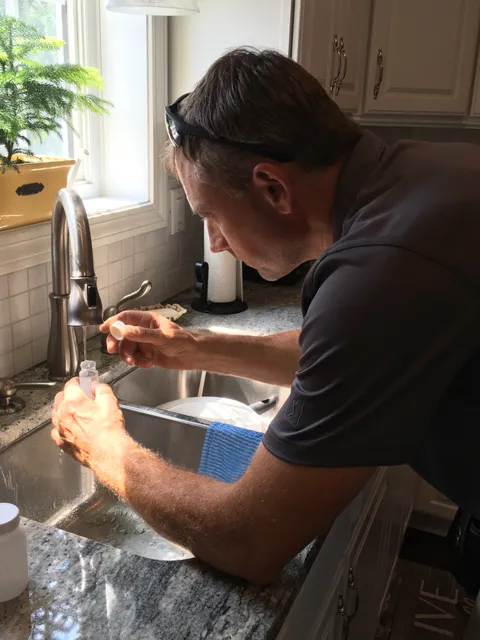
About 342,000 private wells serve roughly 23% of the state's population, according to DPH's private well page, and the department is clear that testing is the owner's job. Buying in Newtown, Wilton, Weston or Easton, in Guilford's northern hills, or across the quiet corner in Woodstock, Ashford and Lebanon, means you'll want a water test as part of the inspection.
Ask:
- Will the inspector draw the sample, or do you need a separate certified lab?
- Which tests are included: bacteria, nitrates, metals, and anything the town's health district recommends?
- Will they also check the well's flow and the pressure tank?
Put in the purchase agreement what happens if the water fails: treatment at the seller's cost, a price credit or the right to walk away.
Oil tanks, septic and other add-ons
Where oil heats the house, ask about the tank: where it is, how old it is, and whether there's any sign of a buried tank from an earlier system, such as a fill pipe in the yard. Removing a buried residential tank is specialized work in Connecticut and can be costly.
Septic systems need their own inspection by a septic professional. Chimneys on older houses, especially those feeding oil or wood appliances, may call for a chimney inspection. A sewer camera on older city lots in New Haven or West Hartford can find broken or root-filled lines before you own them.
Two-families, three-families and condos
Many Connecticut buyers start with a multi-family: a two-family in New Britain, a three-family in New Haven, or a condo in a converted mill. Each needs a different inspection.
- Multi-family. Ask the inspector to cover every unit, the common areas and every heating system. Each unit often has its own boiler or furnace, water heater and electric panel, and the price should reflect that. Ask whether they'll look at fire separation between units and the condition of rear stairs and porches, which carry tenants out in an emergency.
- Condos. The inspection covers the unit itself. The roof, siding, foundation and shared systems belong to the association, so read its budget, reserve study and meeting minutes along with the report.
Fitting it all into the contingency window
Purchase contracts usually give the buyer a short window to inspect and respond. Book the inspector as soon as the offer is accepted, and line up any engineer, septic inspector, well test or radon test at the same time. Lab results for water can take several days. If the window is too short for everything a house like yours needs, ask your attorney or agent about extending it before you sign, not after.
Lead and other age-related issues
In a house built before 1978, assume lead paint until tested. A general home inspection doesn't test for lead. If you have young children, read DPH's lead page for homeowners and consider a separate lead inspection, especially before renovating.
Inspection fees, add-on tests and the report you should expect
The state calculator puts a typical home inspection at $500 to $710. Estimate yours, with add-ons, on the Connecticut home inspection cost page. Fairfield County inspectors, around Ridgefield and the Gold Coast, tend to charge more, while those working Farmington, Avon and the eastern towns often charge less for the same size of house. Ask what's in the report, how soon you'll get it, and whether the inspector will take questions after you read it. A report full of photos and plain-language notes, sorted by urgency, is far more useful in a negotiation than a checklist, and a sample report from a past job will show you which kind you're paying for.