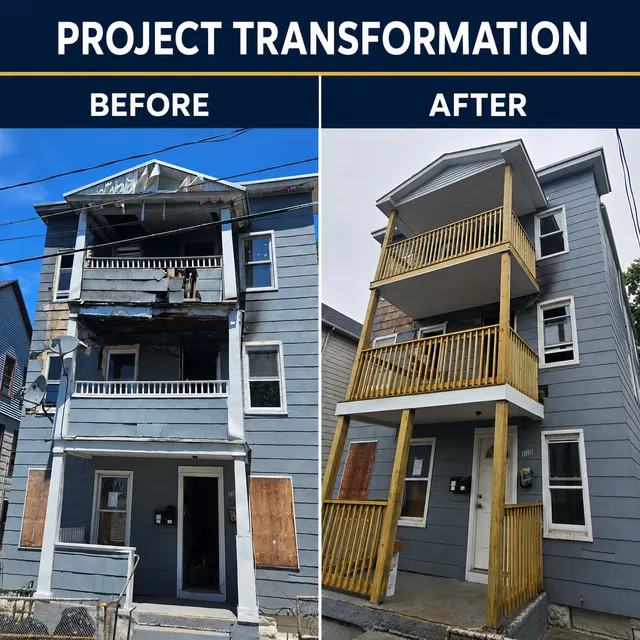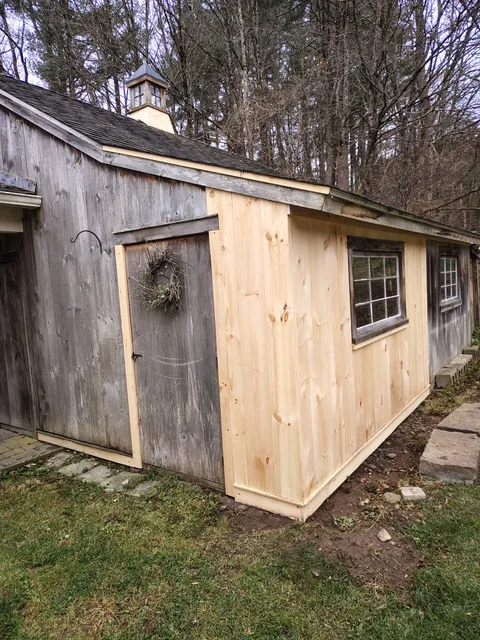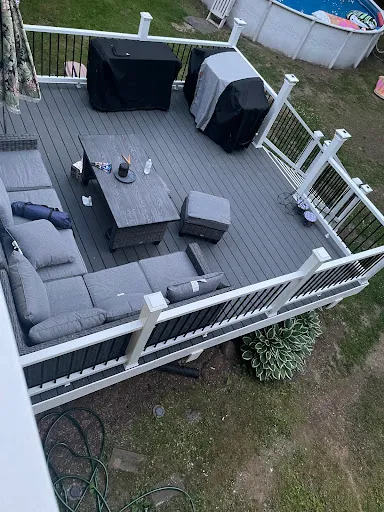
A handyman is the person you call for the list: the sticking door, the loose stair rail, the drywall patch, the storm door that won't latch, the shelves for the garage. In Connecticut that list runs into state law sooner than most people expect, because the Home Improvement Act starts at $200.
The $200 job and the $1,000 year
Two numbers in the Home Improvement Act decide whether a handyman needs to be registered (CGS Sec. 20-419):
- $200. Home improvement means repair, replacement, remodeling and similar work on a residence where the total price is more than $200. A $150 door adjustment is outside the Act; a $450 morning of repairs is inside it.
- $1,000. A person whose home improvement contracts with all customers add up to no more than $1,000 in any 12 months isn't a "contractor" under the Act. That's the neighbor who fixes a few things a year. Someone who advertises, takes calls from strangers and works most weeks has passed it.
So a working handyman in Connecticut generally needs to be registered as a Home Improvement Contractor. Search the person's name or business name on eLicense. It costs the handyman $120 to apply and $100 a year for the Guaranty Fund, which isn't a burden a serious business avoids. DCP's registration page also notes the work that doesn't need it, such as routine property maintenance and cleaning.
The definition reaches rental property too. Landlords hiring a handyman for apartments in Norwich, Middletown or Torrington are hiring for home improvement just as an owner-occupant is.
Jobs a handyman can't take: wiring, pipes and gas
Registration doesn't stretch to cover licensed trades. DCP's guide to which license a contractor needs separates the two systems, and electrical, plumbing and heating work need their own state licenses. That rules out more of the to-do list than people expect:
- replacing a light fixture, switch or outlet;
- adding a circuit for a new appliance;
- swapping a faucet, toilet or garbage disposal where the supply or drain is disconnected;
- anything involving a gas line, a boiler or a water heater.
A handyman who offers to "just swap the fixture" is offering unlicensed work. That matters if something goes wrong: an insurer may ask who did the wiring. The practical answer is to split the job. Let the handyman patch, paint and hang the shelving, and bring in a licensed electrician or plumber for the connection.
Does a $400 job need a written contract?
If it's home improvement work over $200, yes. The Act makes a contract unenforceable against you if it's missing its required parts: it must be written and signed by both of you, dated, contain the whole agreement, show the handyman's name, address and registration number, give a start date and a completion date, and include notice of your cancellation rights.
For a half-day of repairs that can be one page. What matters is that it lists the tasks, the price and the date, and that both of you sign. Every home improvement contract is treated as a home solicitation sale, which brings in the three-business-day cancellation right of the Home Solicitation Sales Act. On a small job you'll rarely use it, but its notice should be there.
Insurance to ask for before anyone climbs your ladder
Handyman work involves ladders, roofs, power tools and other people's houses. Registration itself requires proof of a liability policy worth $20,000 or more. The Department of Consumer Protection's May 2026 advice to homeowners puts asking for proof of that coverage on its short list, alongside hiring local and checking eLicense.
Have the insurance agent email you the certificate rather than accepting a photocopy. If the handyman brings a helper, ask whether the helper is covered by workers' compensation. Without it, an injury on your property can become a claim on your homeowner's policy.
Day rates, task prices and the long list
Handymen price in two ways: per task, or by the hour, half day or day. Per-task prices are easy to compare but can add up; a day rate rewards a well-organized list.
Get more out of a day rate by:
- writing the list in order of priority, so the important jobs get done if time runs short;
- buying materials ahead, or agreeing in writing who buys them and how they're billed;
- grouping work by room and by tool, so the handyman isn't driving to the hardware store three times.
In the larger suburbs, such as West Hartford, Bloomfield and Rocky Hill, or Shelton, Bethel and New Fairfield in Fairfield County, many handymen keep a waiting list. In smaller eastern towns like Griswold and Plainfield, or in New Hartford up in the hills, one person may cover a wide area and bundle visits by neighborhood. Ask how far out the first open date is.
Small jobs in an old house still need lead-safe work
Most of the handyman list in an older Connecticut home touches paint: planing a sticking door, replacing a piece of window trim, patching plaster, scraping a porch rail. Most of the state's housing is older than 1980, and paint applied before 1978 may contain lead.
Federal rules require a firm doing paid work that disturbs painted surfaces in a pre-1978 home to hold EPA lead-safe certification and to contain and clean up the dust it makes. Ask a handyman whether they're certified, and how they handle a door they plane or trim they cut in an older house. The state health department's advice against dry scraping applies here too. This matters most in homes with young children.
The cash-only handyman
A handyman who wants cash, won't give a last name or a business name, and can't show a registration is common and risky. If the work fails or the person disappears with a deposit, you have little to go on. The state's Guaranty Fund pays only for work by registered contractors. Pay by check or card, and never pay the whole job before it's done.
When the list outgrows a handyman
Some jobs start small and stop being handyman work. Rot under a window that runs into the sill and the framing, a deck that needs new footings, a bathroom floor that turns out to need new subfloor and plumbing: at that point you need a carpenter, a remodeler or a licensed trade, and possibly a permit from the town. A good handyman will say so.
Handyman rates from Danbury to the Rhode Island line
The state calculator's default for a typical handyman visit is $210 to $800. Price your own list on the Connecticut handyman cost page. Rates run higher in Fairfield County, especially around Danbury and the Gold Coast, and lower east of the Connecticut River, from Portland and East Hampton toward the Rhode Island line.