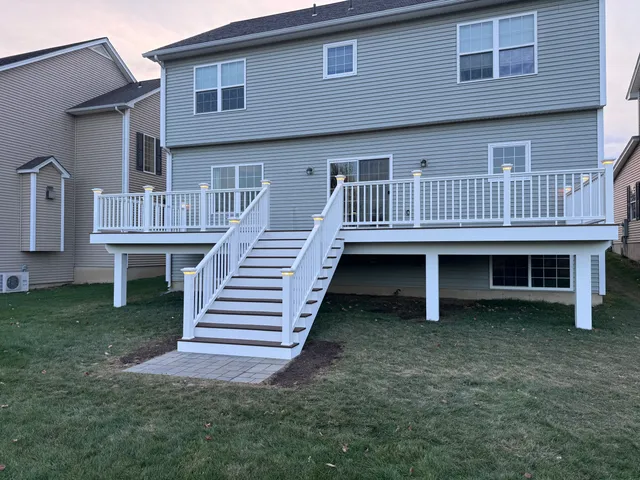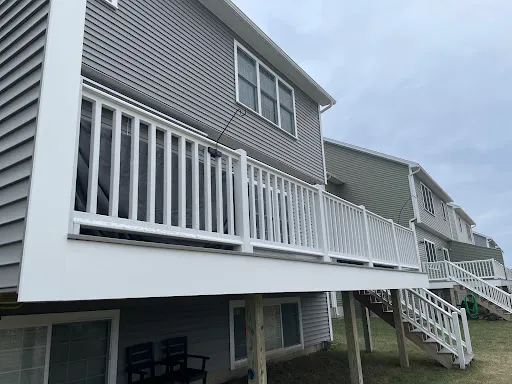
Every Vermont town has a few people who fix things: the retired carpenter in Underhill who will rehang a door, the young business in Winooski that assembles furniture and patches drywall, the caretaker in Burke who checks on second homes all winter. Handyman work is the least regulated trade in the state, and for most small jobs that is fine. The trouble comes at the edges, where a small job turns into a licensed one or a big one.
Where Vermont's registration line falls for small jobs
Vermont's residential contractor law, 26 V.S.A. chapter 106, requires registration with the Office of Professional Regulation for anyone who contracts with a homeowner for residential work worth more than $10,000, counting both labor and materials. A morning of repairs never comes close. A handyman in Milton or Northfield who mostly does small jobs is not required to be on the register.
The line can sneak up, though. A job that starts as "fix a few things on the porch" can turn into rebuilding the porch. If the contract grows past $10,000, the rules change: registration, a $1 million-per-occurrence liability policy, a signed agreement and a limit on the deposit. If your handyman is not registered, a growing job is the point to bring in someone who is, or to split the work in a way that is honest about what each part is. You can check anyone's status on the OPR lookup.
The plumbing a handyman is not allowed to do
Plumbing is where a handyman most often oversteps. Vermont's plumbing law, 26 V.S.A. § 2198, requires plumbing done in the state to be performed by a licensed plumber, with a single exception for an owner working in their own owner-occupied single-family home. A handyman is not the owner. Replacing a faucet cartridge may be repair; replacing the faucet, the toilet, the water heater or any supply or drain line is plumbing.
That matters for more than the law. Plumbing mistakes in Vermont freeze. A badly made connection in an outside wall in Highgate or Williamstown can hold all fall and burst in January. If your list includes anything with water in it, ask whether the handyman works with a licensed plumber, and check that plumber on the state's licensed plumbers list.
For electrical work, ask whether the handyman holds a Vermont electrician license. For anything beyond a like-for-like swap of a fixture or a switch, a licensed electrician is the safer hire, and in Burlington electrical work requires a city trades permit.
Lead rules that catch small jobs in old houses
A handyman's work is exactly the kind that disturbs old paint a little at a time: planing a sticking door, replacing a window sash cord, sanding a stair rail, cutting into a painted wall to fix a hole. The Health Department's lead rules apply to houses built before 1978 and require licensed lead-safe work once more than a square foot of painted surface in a room is disturbed. A handyman working in an old house in Rutland City, West Rutland or Proctor will cross that line on many ordinary jobs.
Ask whether the handyman holds an RRPM license. If not, keep their work in older rooms to jobs that do not disturb paint, or hire someone who is licensed for the jobs that do. Any window replacement in a pre-1978 house counts as lead-safe work regardless of size.
Caretaking a second home through the winter
In the ski and lake towns, the handyman is often also the caretaker. Owners of second homes near Burke Mountain, Jay or Killington, or of camps on the lakes in Derby, rely on someone local to check that the heat is on after a storm, that the pipes have not frozen, that the roof has shed its snow and that nobody has broken in.
Put that arrangement in writing. Agree how often the caretaker visits and what they check: thermostat, water, smoke and carbon monoxide alarms, signs of leaks or animals. Agree how they report, with photos and dates. And agree what they may spend on an urgent repair without calling you first. If the arrangement includes repair work, the same plumbing and lead rules apply as for any handyman.
Small repairs after a storm, and when to stop
After a summer flood or a winter storm, handymen are often the first people homeowners call: to pull out wet drywall, board a broken window, clear a gutter or tarp a roof. That work matters, and speed matters with it. Vermont's registration law also recognizes emergencies; emergency work is one of the listed exemptions, so a quick response to a storm is not held up by paperwork.
But storm repair is where a small job most often becomes a large one. Wet drywall can hide a wet sill, a damaged panel or a cracked foundation. A good handyman will tell you when the job has moved past them, and will help you find the plumber, electrician or registered contractor it now needs. Be careful with anyone who arrives unasked after a storm offering to do everything; take a name, check it on the register and with the Attorney General, and get a second opinion before signing for anything big.
What a fair handyman price looks like here
The Vermont calculator default for a typical handyman job is about $190 to $750; the Vermont handyman cost page compares task prices with half-day and full-day rates. Expect a minimum charge for short visits, and expect travel to matter: a handyman driving from Lyndon to a village twenty miles away is spending that time on your job.
For small jobs, payment on completion is common. The Attorney General's home repair checklist applies to small jobs as much as large ones: get the price and the scope in writing, ask for proof of insurance, and keep deposits low. A text message that says "replace two porch boards and the rotted step, $380 plus materials" is a written agreement; save it.
Insurance, references and the one-person business
Many handymen work alone, without the office, website and certificate of insurance a larger company has. That is not a red flag in itself. Ask anyway whether they carry liability insurance and whether it covers work inside a customer's home. A dropped ladder through a window or a flooded kitchen from a loose fitting is a claim, and without insurance it is a conversation about who pays. If the handyman brings a helper, ask whether that person is an employee or a friend, since that can matter if someone is hurt on your property. Ask for two or three customers you can call, ideally in your own town, so you can hear about reliability as well as skill. In a small Vermont town, the best reference is often your neighbor, and the best handymen are booked weeks ahead because of it. In Hartland or Swanton, ask at the town office or the hardware store who people call.